

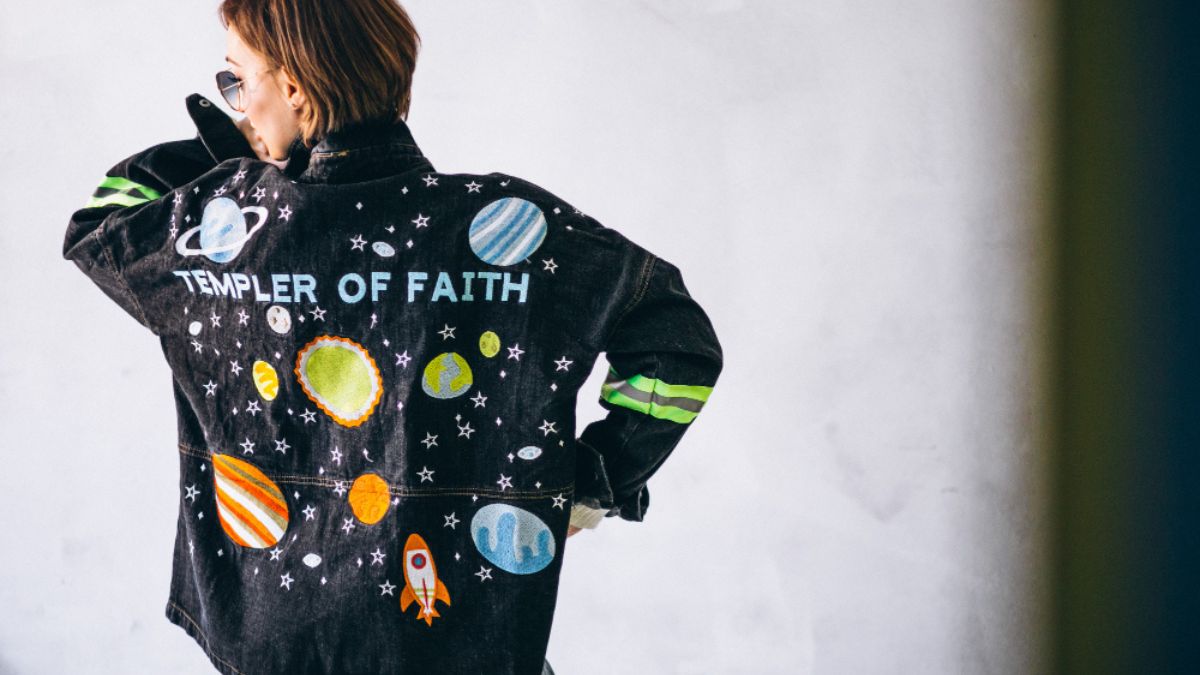
In a world increasingly shaped by artificial intelligence, few artists speak about its philosophical depth as boldly as Grimes. Her perspective blends art, science fiction, and existential curiosity into a compelling idea:
👉 What if the universe isn’t something to fear—but something to uncover?
🌌 A Cosmic Perspective on Knowledge
Grimes doesn’t view the universe as a cold, empty void. Instead, she imagines it as something alive—almost like a mystery waiting to be revealed layer by layer.
Her metaphor of “the universe unveiling itself” suggests that human curiosity and creativity are not accidents. They are tools—perhaps even invitations—to explore deeper truths.
From Sci-Fi Dreams to Real AI
Back in 2010, Grimes released her debut album Geidi Primes, inspired by Dune by Frank Herbert.
At the time, Dune was still a cult sci-fi reference—not yet the global blockbuster it would later become.
The Key Idea from Dune:
- A future without “thinking machines”
- Humanity surviving after an AI uprising
- A philosophical tension between technology and human control
Fast forward to today, and those fictional ideas feel closer to reality than ever.
🤖 AI: The Most Powerful Tool Yet
Grimes has spent time in tech hubs like San Francisco, observing the rapid rise of AI.
Her takeaway?
Engineers today hold an unprecedented level of power.
Unlike the past—where innovation required governments, armies, or massive infrastructure—modern AI can be built by relatively small teams with enormous impact.
A New Kind of Power
Historically, inventors worked under kings, empires, or institutions. Today, AI engineers operate in a very different landscape:
- Faster innovation cycles
- Smaller teams with global influence
- Fewer traditional power structures
This shift raises a major question:
👉 Who is shaping the future—and how consciously are they doing it?
🎨 Creativity vs. Destiny
Grimes challenges a common belief: that technology follows a fixed path.
Instead, she suggests a balance between:
- Technological determinism (the idea that progress is inevitable)
- Human agency (the power of individuals to shape outcomes)
Her view?
👉 Both are true at the same time.
Like an artist limited by available colors—but still free to create something entirely new.
AI as a “Child” — A Risky Analogy
In tech circles, AI is often compared to a child—something we create but cannot fully control.
Grimes partly agrees, but highlights a deeper concern:
- A child grows slowly
- AI could evolve rapidly
- Control may not scale with capability
This makes artificial intelligence fundamentally different—and potentially more unpredictable.
🧠 The Psychology of AI Development
One of her most interesting observations is psychological:
Many of the smartest people are either rushing to build AI—or fearing it entirely.
This creates a strange dynamic:
- High intelligence
- High uncertainty
- Low clarity on long-term consequences
And in many cases, a hesitation to openly share bold ideas.
The Missing Piece: Cultural Vision
While engineers focus on building tools, Grimes emphasizes something often overlooked:
👉 Where is the cultural plan?
She argues that:
- Technology alone isn’t enough
- Society needs direction and philosophy
- Artists and thinkers must play a role
Without this, even powerful tools may lack meaningful purpose.
⚖️ Power, Politics & Responsibility
As AI grows, it intersects with politics, governance, and global power.
Grimes points out:
- Society lacks clear rules for AI governance
- Decision-making is becoming more complex
- Expertise is increasingly specialized
This creates a gap between:
- Those who build technology
- Those who regulate it
A Radical Idea: The “Council of Experts”
Instead of traditional systems, she imagines something different:
👉 A small group of highly knowledgeable individuals guiding AI decisions
While not perfect, the idea reflects a deeper concern:
- Complex systems may require specialized leadership
- General public knowledge may not keep up
AI and Human Creativity
Despite concerns, Grimes remains optimistic about one thing:
👉 AI is pushing humans to become more creative—not less.
She points to tools like:
- Midjourney
- DALL·E
These tools:
- Challenge artists
- Raise creative standards
- Inspire new forms of expression
🎭 Art in the Age of AI
Instead of replacing artists, AI is:
- Forcing originality
- Encouraging experimentation
- Expanding what art can be
Grimes even notes that she now appreciates and buys more human-made art than ever before.
The Bigger Question: What Does the Universe Want?
At the heart of her philosophy is a poetic idea:
👉 Why would the universe make us creative if not to explore it?
She suggests that:
- Intelligence may not be random
- Love, curiosity, and creativity could be fundamental forces
- Humanity’s role might be to “unveil” reality
Final Thoughts
Grimes’ perspective isn’t just about AI—it’s about what it means to be human in an age of machines.
Her message sits somewhere between hope and caution:
- AI is powerful and inevitable
- Humans still have agency
- The future is not fully written
And perhaps most importantly:
👉 If we cannot stop what’s coming, we should at least make it meaningful.