


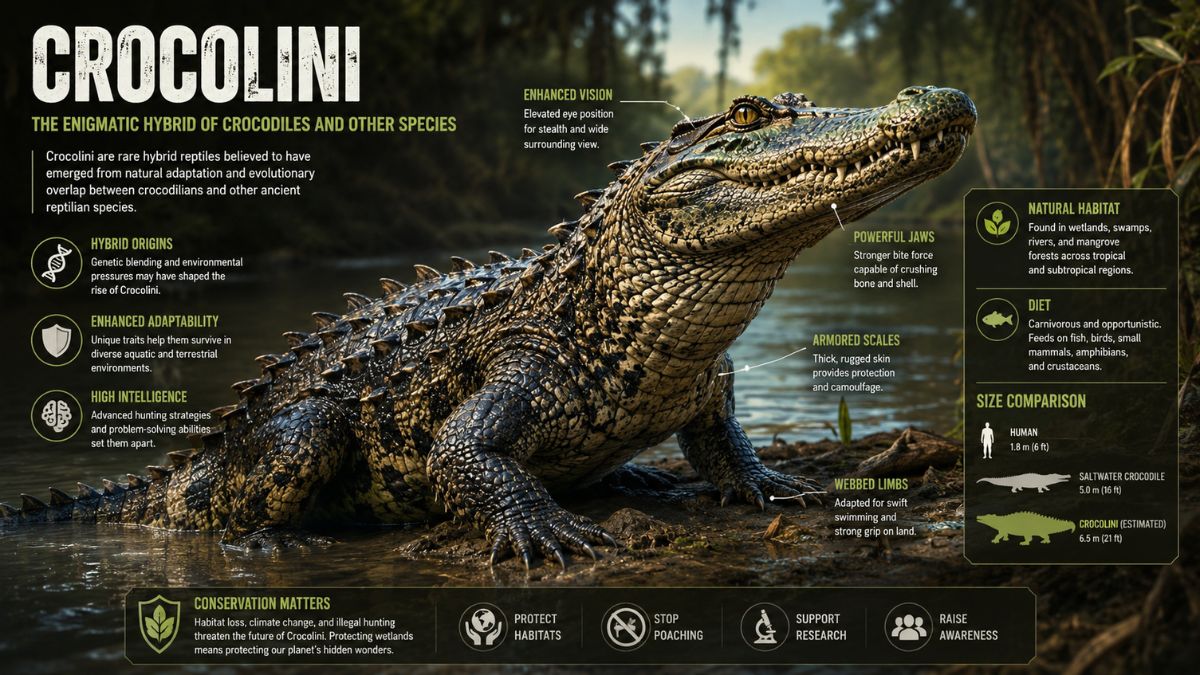
Deep within remote wetlands and hidden river systems, stories circulate about a strange creature known as the Crocolini — a fascinating hybrid said to combine the raw strength of crocodiles with traits borrowed from other reptilian and aquatic species. While some believe Crocolini are simply myths born from folklore, others argue that these mysterious creatures could represent nature’s extraordinary ability to adapt and evolve.
What makes Crocolini so captivating is not just their unusual appearance, but the mystery surrounding their existence. Are they the result of rare evolutionary changes? Could environmental pressures have triggered unusual hybridization patterns? Or are they simply misunderstood creatures that science has yet to fully classify?
In this article, we’ll explore everything about Crocolini — from their origins and physical traits to their hunting behavior, habitat, controversies, and uncertain future.
The Origins of Crocolini
The story of Crocolini begins millions of years ago when ancient crocodilian species roamed rivers, swamps, and coastal regions across the planet. Scientists who study hybrid evolution believe Crocolini may have emerged through a combination of genetic adaptation and environmental survival mechanisms.
As climates shifted and ecosystems changed, certain reptile species were forced into overlapping territories. Over generations, unusual evolutionary traits began appearing in isolated populations. These changes may have eventually produced creatures displaying characteristics from multiple species.
Unlike traditional crocodiles, Crocolini are believed to possess enhanced adaptability, allowing them to survive in environments where ordinary reptiles struggle.
Some wildlife researchers even speculate that human interference, habitat destruction, and experimental breeding programs may have accelerated the appearance of hybrid species in recent decades.
A Creature Unlike Any Other
Crocolini are often described as both intimidating and mesmerizing. At first glance, they resemble crocodiles, but closer observation reveals several unusual features.
Distinct Physical Features
Some of the most notable characteristics include:
- Long muscular bodies built for both land and water movement
- Thick armored scales similar to crocodiles
- Sharper jaw structures with enhanced bite force
- Eyes positioned high on the head for stealth hunting
- Strong tails capable of rapid propulsion
- Webbed limbs in some variants for superior swimming ability
Interestingly, the coloration of Crocolini can vary dramatically. Some exhibit dark earthy tones that blend perfectly into muddy riverbanks, while others display greenish or patterned scales suited for dense vegetation.
Researchers believe these variations depend heavily on their environment and genetic makeup.
Where Do Crocolini Live?
Crocolini are most commonly associated with freshwater ecosystems such as:
- Marshlands
- Swamps
- Tropical rivers
- Wetlands
- Mangrove forests
These environments provide the perfect balance of water access, prey availability, and camouflage opportunities.
Hidden Yet Adaptable
Unlike ordinary crocodiles that often dominate a single territory, Crocolini appear remarkably adaptable. Reports suggest some populations have survived in both tropical climates and cooler temperate regions.
Dense vegetation plays an important role in their survival. Thick reeds, muddy banks, and submerged roots allow Crocolini to remain hidden while stalking prey or avoiding threats.
Sadly, habitat destruction caused by urban expansion and pollution is forcing many wildlife species — including possible Crocolini populations — into shrinking ecosystems.
Diet and Hunting Behavior
Crocolini are believed to be highly opportunistic predators. Rather than relying on a single food source, they adapt their diet depending on their surroundings.
Common Prey
Their diet may include:
- Fish
- Water birds
- Small mammals
- Amphibians
- Crustaceans
Some larger individuals are rumored to attack medium-sized animals near riverbanks.
Masters of Ambush
Much like crocodiles, Crocolini rely on patience and stealth. They often remain nearly invisible beneath the water’s surface, exposing only their eyes and nostrils.
Once prey approaches, they strike with astonishing speed.
Researchers studying crocodilian behavior believe Crocolini may possess even greater intelligence than ordinary crocodiles. Some sightings suggest cooperative hunting strategies where multiple individuals work together to corner schools of fish.
This level of coordination has fueled ongoing debates about their cognitive abilities.
Why Are Scientists So Interested in Crocolini?
Crocolini have become a subject of fascination because they challenge traditional ideas about species boundaries.
Evolution in Action
Hybrid creatures often reveal how animals adapt under environmental stress. Studying Crocolini could help scientists better understand:
- Genetic mutation
- Climate adaptation
- Evolutionary resilience
- Cross-species survival mechanisms
In a rapidly changing world, these insights are becoming increasingly valuable.
Some researchers even believe studying hybrid species could help conservationists protect endangered reptiles facing habitat collapse.
The Controversy Surrounding Crocolini
Not everyone views Crocolini positively.
The idea of hybrid species raises serious ethical and ecological concerns.
Ecological Risks
Critics worry that hybrid predators could disrupt delicate ecosystems by:
- Competing with native predators
- Altering food chains
- Spreading new diseases
- Outcompeting endangered species
Others argue that if human activity contributed to their existence, then humans also carry responsibility for managing their impact.
Ethical Questions
Should humans interfere with natural evolution?
That question lies at the center of the Crocolini debate. While some scientists see hybridization as a natural evolutionary process, others fear that artificial breeding and genetic experimentation could create dangerous ecological consequences.
The debate continues to divide conservationists worldwide.
Human Encounters with Crocolini
Stories involving Crocolini often blend fear, wonder, and curiosity.
In regions where sightings are reported, local communities describe mysterious reptilian creatures moving silently through rivers at night. Fishermen occasionally claim to encounter unusually large predators unlike ordinary crocodiles.
While many reports remain unverified, these stories have fueled documentaries, folklore, and online speculation.
Cultural Significance
In some cultures, Crocolini symbolize:
- Survival
- Transformation
- Adaptability
- Nature’s hidden power
Artists and storytellers frequently portray them as guardians of rivers or creatures representing the balance between fear and respect for the wild.
Conservation Efforts
Whether Crocolini are fully recognized species or rare hybrids, conservationists agree on one important point: protecting ecosystems is essential.
Current Conservation Strategies
Efforts include:
- Wetland preservation
- Anti-poaching initiatives
- Wildlife monitoring programs
- Habitat restoration projects
- Public education campaigns
Some research facilities are also exploring controlled breeding studies to better understand hybrid genetics and population stability.
Technology now plays a major role in wildlife conservation. GPS tracking systems and environmental sensors help researchers monitor animal movement and habitat changes more effectively than ever before.
The Biggest Threats to Crocolini
Like many rare wildlife species, Crocolini face several dangers.
Habitat Loss
Deforestation, urbanization, and pollution continue destroying wetlands worldwide.
Climate Change
Changing temperatures and rising water levels affect breeding cycles, migration patterns, and prey availability.
Illegal Hunting
Rare creatures often become targets for illegal wildlife trade. Exotic animal collectors may seek hybrid species due to their unusual appearance and rarity.
Without stronger conservation efforts, the future of Crocolini could become increasingly uncertain.
Will Crocolini Survive the Future?
The survival of Crocolini depends largely on humanity’s relationship with nature.
If ecosystems continue disappearing, hybrid species with already fragile populations may struggle to survive. However, increased awareness and scientific research offer hope.
Conservation groups are beginning to recognize the importance of preserving biodiversity in all forms — including unusual or misunderstood species.
The story of Crocolini may ultimately become a symbol of resilience in an era of environmental change.
Final Thoughts
Crocolini remain one of the most fascinating mysteries in the world of wildlife and speculative biology. Whether viewed as evolutionary marvels, ecological warnings, or legendary creatures, they remind us that nature is far more complex than we often imagine.
Their existence — real or theoretical — sparks important conversations about adaptation, conservation, and the consequences of environmental disruption.
As science continues uncovering new discoveries about hybridization and biodiversity, Crocolini stand as powerful symbols of nature’s unpredictability and creativity.
Perhaps the greatest lesson they offer is this:
Nature never stops evolving.