


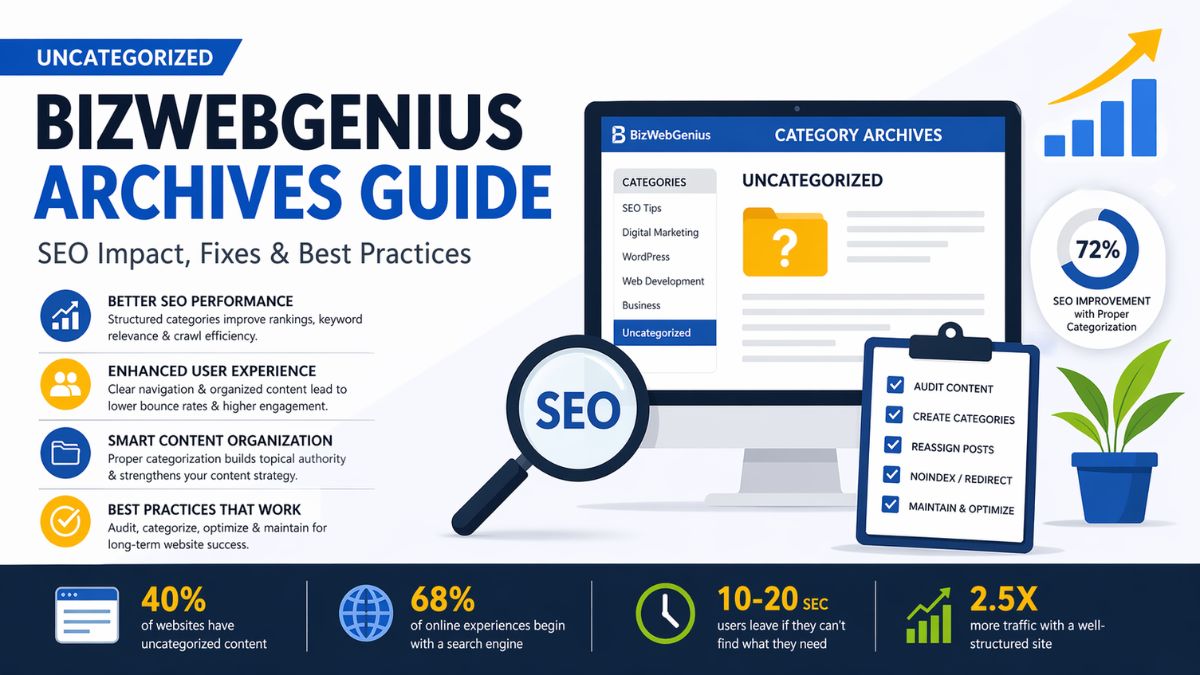
If you run a website, you’ve likely come across uncategorized BizWebGenius archives—but most site owners underestimate their impact. While they may seem like a harmless default feature, these archives can quietly affect your SEO performance, site structure, and user experience.
In today’s competitive digital landscape, even small structural issues can influence rankings. That’s why understanding and optimizing uncategorized archives is essential for building a well-organized, search-friendly website.
What are the Uncategorized BizWebGenius Archives?
Uncategorized BizWebGenius archives are automatically generated pages that collect posts without assigned categories. In most content management systems (CMS), categories help organize content into meaningful topics.
When no category is selected during publishing, the system assigns the post to a default label—usually “Uncategorized.”
Key Characteristics:
- Automatically created by CMS platforms
- Contain unrelated or mixed-topic content
- Often overlooked during SEO audits
- It can grow over time without proper management
While this ensures no content is lost, it creates a cluttered archive that lacks context and relevance.
Why Do Uncategorized Archives Exist?
Uncategorized archives exist as a fallback mechanism in content management systems. They prevent publishing errors and ensure every post has a place.
Common Reasons They Appear:
- Authors forget to assign categories
- Bulk content imports lack proper structure
- Poor editorial workflows
- Temporary storage during content creation
- Website migrations or redesigns
According to SEO audits, over 30–40% of small websites have at least some content sitting in uncategorized sections—often unnoticed.
SEO Impact of Uncategorized BizWebGenius Archives
From an SEO perspective, uncategorized archives can weaken your site’s performance in several ways.
1. Weak Keyword Relevance
Search engines rely on categories to understand content themes. Uncategorized posts lack topical signals, making it harder to rank for specific keywords.
2. Crawl Budget Waste
Search engines may spend time indexing low-value archive pages instead of high-priority content.
3. Poor Internal Linking Structure
Without categories, related posts are not grouped effectively, which reduces the distribution of link equity.
4. Duplicate or Thin Content Risks
Archive pages often contain snippets of posts, which can appear as low-value or duplicate content.
5. Lower Topical Authority
A well-structured site builds authority around topics. Uncategorized content disrupts this structure.
👉 In short: Uncategorized archives dilute your SEO strategy rather than support it.
Impact on User Experience (UX)
User experience is just as important as Uncategorized BizWebGenius Archives—and uncategorized archives can hurt both.
How They Affect Visitors:
- Confusing navigation with no clear topic focus
- Difficulty finding related content
- Increased bounce rates
- Reduced trust in site professionalism
Studies show that users typically leave a site within 10–20 seconds if they can’t find relevant content quickly. Poor categorization plays a major role in this behavior.
When Uncategorized Archives Can Be Useful
Despite their downsides, uncategorized archives can serve a purpose when used strategically.
Valid Use Cases:
- Temporary storage for drafts
- Editorial review staging area
- Content migration phases
- Testing or sandbox environments
The key is temporary usage—not leaving them active indefinitely.
How to Fix and Manage Uncategorized Archives (Step-by-Step)
To maintain a clean and SEO-friendly website, follow this structured approach:
1. Perform a Content Audit
Identify all posts assigned to “uncategorized.”
2. Create a Clear Category Structure
Group content based on:
- Topics
- Keywords
- User intent
3. Reassign Posts Properly
Move each post into the most relevant category.
4. Optimize the Archive Page
Choose one of these actions:
- Redirect it to a relevant category
- Add a noindex tag
- Rename it to something meaningful
5. Update Publishing Workflow
Ensure every new post has:
- At least one category
- Proper tags
- Internal links
6. Improve Internal Linking
Link related posts within the same category to boost SEO value.
Benefits of Proper Category Optimization
Fixing uncategorized archives can significantly improve your site’s performance.
SEO Benefits:
- Better keyword targeting
- Improved crawl efficiency
- Stronger topical authority
- Higher rankings in search results
User Experience Benefits:
- Easier navigation
- Better content discovery
- Increased engagement time
- Lower bounce rates
A well-structured website is easier for both users and search engines to understand.
Common Mistakes to Avoid
Many website owners unknowingly make these errors:
- Ignoring uncategorized posts for months
- Deleting archive pages without fixing content
- Creating too many categories (over-categorization)
- Using vague category names
- Not enforcing editorial guidelines
Avoiding these mistakes helps maintain long-term SEO health.
Why Uncategorized Archives Matter in Content Strategy
Modern SEO is no longer just about keywords—it’s about content structure and intent.
Uncategorized BizWebGenius archives highlight gaps in your strategy:
- Missing content organization
- Weak topic clustering
- Lack of editorial consistency
By fixing them, you:
- Strengthen your site architecture
- Improve topical relevance
- Enhance overall content strategy
Think of it this way:
👉 Categories are the backbone of your website’s SEO.
Conclusion
Uncategorized BizWebGenius archives are a natural part of content management systems—but ignoring them can cost you rankings, traffic, and user trust.
By auditing your content, building a clear category structure, and maintaining consistent publishing practices, you can turn a hidden weakness into a powerful SEO advantage.
A well-organized website doesn’t just rank better—it delivers a smoother, more engaging experience that keeps visitors coming back.
FAQs
Q1: Should I delete the uncategorized archive page?
Not always. It’s better to redirect or noindex it unless it serves a purpose.
Q2: How many categories should a website have?
There’s no fixed number, but keep it focused—usually 5–10 core categories for most blogs.
Q3: Does uncategorized content hurt SEO?
Yes, it weakens keyword relevance and site structure, which can impact rankings.
Q4: Can I rename “uncategorized”?
Yes, you can rename it to something more meaningful, but proper categorization is still necessary.